
Blog Article
The Complete Guide to Building a Social Media Strategy That Actually Works
Social media strategy. Two words that can either fill you with excitement or make you want to hide under your desk with a cup of tea. If you’re reading this, chances are you fall somewhere between those two extremes, and you’re looking for a clear, practical approach to creating a social media strategy that doesn’t just exist on paper but actually delivers results for your business.
Let’s be honest about something from the start: social media isn’t just about posting pretty pictures and hoping for the best. It’s become a fundamental part of how businesses connect with their audience, build brand awareness, and drive real business outcomes. Whether you’re a small business owner in Manchester, a marketing manager in London, or running a growing company like BRINQQ, understanding how to craft an effective social media strategy is no longer optional.

What Exactly Is a Social Media Strategy?
Before we dive into the how, let’s clarify the what. A social media strategy isn’t just a content calendar or a list of platforms where you’ll post. It’s a comprehensive plan that outlines how you’ll use social media to achieve specific business objectives.
Think of it as your roadmap. Without it, you’re essentially driving around without knowing where you’re going, hoping you’ll stumble upon your destination. With a solid strategy, you know exactly which route to take, what landmarks to look for, and how to measure whether you’re making progress.
Your social media strategy should answer key questions: Who are you trying to reach? What do you want them to do after engaging with your content? Which platforms will help you achieve these goals most effectively? How will you measure success?
Why Your Business Needs a Proper Social Media Strategy
You might be thinking, “Can’t I just post regularly and see what happens?” Well, you could, but that’s a bit like throwing darts blindfolded and hoping to hit the bullseye. Sure, you might get lucky occasionally, but it’s hardly a reliable approach for growing your business.
A well-crafted social media strategy provides direction and purpose to your online presence. It ensures every piece of content you create serves a specific purpose, whether that’s building brand awareness, driving website traffic, generating leads, or nurturing existing customers.
Consider the numbers: with over 54 million social media users in the UK alone, your potential customers are definitely online.
And they’re not just scrolling for a few minutes; the average internet user aged 16 to 64 worldwide spends 2 hours and 21 minutes on social media every single day. This substantial engagement time highlights the unparalleled opportunity for businesses to connect with their audience.
Users are also looking for value, entertainment, solutions to their problems, and brands they can trust. A strategic approach helps you provide exactly what they’re seeking while advancing your business goals.
Moreover, a proper strategy helps you allocate your resources more effectively. Instead of spreading yourself thin across every platform under the sun, you can focus your time, energy, and budget on the channels that matter most to your audience and your business objectives.
Understanding Your Audience: The Foundation of Everything
Your social media strategy should start with a deep understanding of your target audience. This goes beyond basic demographics like age and location, though those are important too. You need to understand their pain points, interests, online behaviour, and what motivates them to engage with brands on social media.
Start by examining your existing customer base. What are their common characteristics? What challenges do they face that your product or service helps solve? Where do they spend their time online? What type of content do they share, like, and comment on?
Don’t forget to look at your competitors too. Not to copy what they’re doing, but to understand what resonates with your shared audience. What posts generate the most engagement? What tone of voice do they use? What topics do they cover?
Creating detailed buyer personas can be incredibly helpful here. Give your ideal customers names, backgrounds, and specific characteristics. When you’re creating content, you can ask yourself, “Would Sarah from Winchester find this valuable?” or “Does this solve the problem that Marketing Manager Mike keeps talking about on LinkedIn?”
Setting Goals That Actually Matter
Here’s where many businesses go wrong: they set vague goals like “increase brand awareness” or “get more followers.” While these aren’t necessarily bad objectives, they’re not specific enough to guide your strategy or measure your success effectively.
Instead, think about what social media success actually looks like for your business. Are you trying to drive more traffic to your website? Generate qualified leads? Increase customer retention? Reduce customer service costs by providing support through social channels?
Your goals should be specific, measurable, achievable, relevant, and time-bound. Rather than “increase brand awareness,” try “increase brand mention volume by 30% within the next six months” or “drive 500 qualified leads per month through social media channels.”
Remember, your social media goals should align with your broader business objectives. If your company is focused on expanding into new markets, your social media strategy should support that goal. If customer retention is a priority, your social content should focus on nurturing existing relationships and providing ongoing value.
Choosing the Right Platforms for Your Business
One of the biggest mistakes businesses make is trying to be everywhere at once. You don’t need to be on every social media platform that exists. In fact, it’s better to excel on a few platforms than to have a mediocre presence across many.
Each platform has its own unique characteristics, audience, and content formats. LinkedIn is brilliant for B2B networking and thought leadership content. Instagram excels at visual storytelling and reaching younger demographics. Facebook offers robust advertising options and community-building features. X/Twitter is perfect for real-time engagement and customer service. TikTok reaches Gen Z with creative, entertaining content.
The key is choosing platforms where your target audience is most active and engaged. If you’re targeting business decision-makers, LinkedIn should probably be a priority. If you’re selling fashion to young women, Instagram and TikTok might be more relevant.
Don’t feel pressured to jump on every new platform that launches. It’s better to master the fundamentals on established platforms before exploring newer options.
Social Media as a Discovery Channel
Beyond connecting with existing customers, social media has become a primary channel for discovery, with a significant percentage (often over 50%) of internet users finding new brands, products, or services directly through these platforms.
This vital role as a discovery engine means that a well-executed social media strategy is not just about nurturing relationships but actively growing your customer base. It ensures that your valuable content reaches new audiences who are actively seeking solutions, inspiration, or entertainment, making your brand discoverable in a crowded digital landscape.
Content That Connects and Converts
Creating content that resonates with your audience while advancing your business goals is both an art and a science. The most successful social media content provides value to your audience, whether that’s education, entertainment, inspiration, or solutions to their problems.
Think about the 80/20 rule: roughly 80% of your content should provide value to your audience without directly promoting your business, while 20% can be more promotional. This approach builds trust and engagement, making your promotional content more effective when you do share it.

Different types of content serve different purposes in your strategy. Educational content positions you as an expert and helps your audience solve problems. Behind-the-scenes content humanises your brand and builds connections. User-generated content provides social proof and builds community. Promotional content drives specific business actions.
The key is maintaining consistency in your brand voice and visual identity across all content while adapting to each platform’s unique characteristics and audience expectations.
Engaging Your Community
Social media is called “social” for a reason. It’s not a broadcasting channel where you shout into the void and hope someone’s listening. It’s a two-way conversation, and engagement is what separates successful social media strategies from unsuccessful ones.
Respond to comments, ask questions, participate in relevant conversations, and show genuine interest in your audience’s thoughts and opinions. When someone takes the time to comment on your post, acknowledge them. When they share your content, thank them. When they have a question, answer it promptly and helpfully.
Building a community around your brand takes time and consistent effort, but it’s one of the most valuable assets you can create. Engaged communities become brand advocates, providing word-of-mouth marketing that’s far more powerful than any paid advertising.
Measuring What Matters
You can’t improve what you don’t measure, and social media provides a wealth of data to help you understand what’s working and what isn’t. However, not all metrics are created equal. Vanity metrics like total followers or post likes might look impressive, but they don’t necessarily translate to business results.
Focus on metrics that align with your goals. If you’re trying to drive website traffic, track click-through rates and conversion rates from social media. If lead generation is the goal, measure how many qualified leads you’re generating through each platform. If brand awareness is the objective, track reach, impressions, and share of voice in your industry.
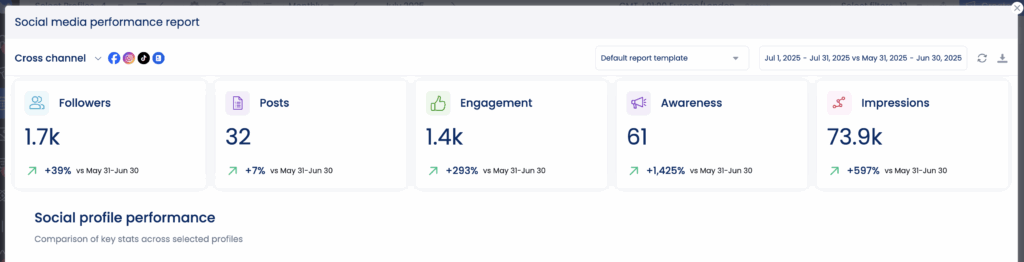
Focus on metrics that align with your business objectives
Most social media platforms provide built-in analytics tools, but you might also want to invest in more comprehensive social media management tools that can track performance across multiple platforms and provide deeper insights.
Common Pitfalls to Avoid
Even with the best intentions, it’s easy to make mistakes that can undermine your social media strategy. One of the most common errors is inconsistency. Posting sporadically or disappearing for weeks at a time damages your credibility and makes it difficult to build momentum.
Another frequent mistake is focusing too heavily on follower count rather than engagement quality. A smaller, highly engaged audience is far more valuable than a large, disengaged one. Don’t be tempted to buy followers or use questionable tactics to inflate your numbers.
Many businesses also make the error of using social media purely as a sales channel. While driving sales is often an important goal, social media users are looking for value, not constant sales pitches. Balance promotional content with genuinely helpful, entertaining, or inspiring posts.
The Future of Social Media Strategy
Social media is constantly evolving, with new features, algorithm changes, and shifting user behaviours. Successful social media strategies need to be flexible enough to adapt while maintaining consistency in core messaging and objectives.
Emerging trends like social commerce, video content, and personalised experiences are reshaping how businesses use social media. Stay informed about these developments, but don’t chase every shiny new trend. Focus on mastering the fundamentals while selectively experimenting with new opportunities that align with your goals and audience preferences.
Making It Happen
Creating a social media strategy might seem overwhelming, but remember that it’s better to start with a simple, focused approach than to create an overly complex plan that you can’t execute consistently. Begin with one or two platforms, develop a clear understanding of your audience and goals, and create valuable content consistently.
Whether you’re just starting out or refining an existing approach, the key to social media success lies in understanding your audience, providing genuine value, and maintaining consistent engagement. Companies like BRINQQ Marketing that focus on strategic, audience-centred approaches often see the best results because they’re not just posting content but building meaningful relationships with their communities.
Remember, social media strategy isn’t a set-it-and-forget-it endeavour. It requires ongoing attention, testing, and refinement. But when done well, it becomes one of your most powerful tools for building brand awareness, driving business growth, and creating lasting connections with your customers.
The digital landscape will continue to evolve, but the principles of good social media strategy remain constant: know your audience, provide value, engage authentically, and measure what matters. Start there, and you’ll be well on your way to social media success.